Fighting Long-Term Hunger: How Food Aid Supports Families Beyond Emergencies

Fighting Long-Term Hunger: How Food Aid Supports Families Beyond Emergencies
Latest News

Fighting Long-Term Hunger: How Food Aid Supports Families Beyond Emergencies

Explore how sustained food aid supports families facing chronic hunger, addressing poverty and rising costs while providing stability, dignity, and long-term relief beyond emergencies.

Hunger is often associated with sudden disasters, but for millions of families, food insecurity is a daily reality rather than a temporary crisis. Poverty, unemployment, rising food prices, and prolonged displacement can leave households struggling to secure enough food long after emergency headlines fade.

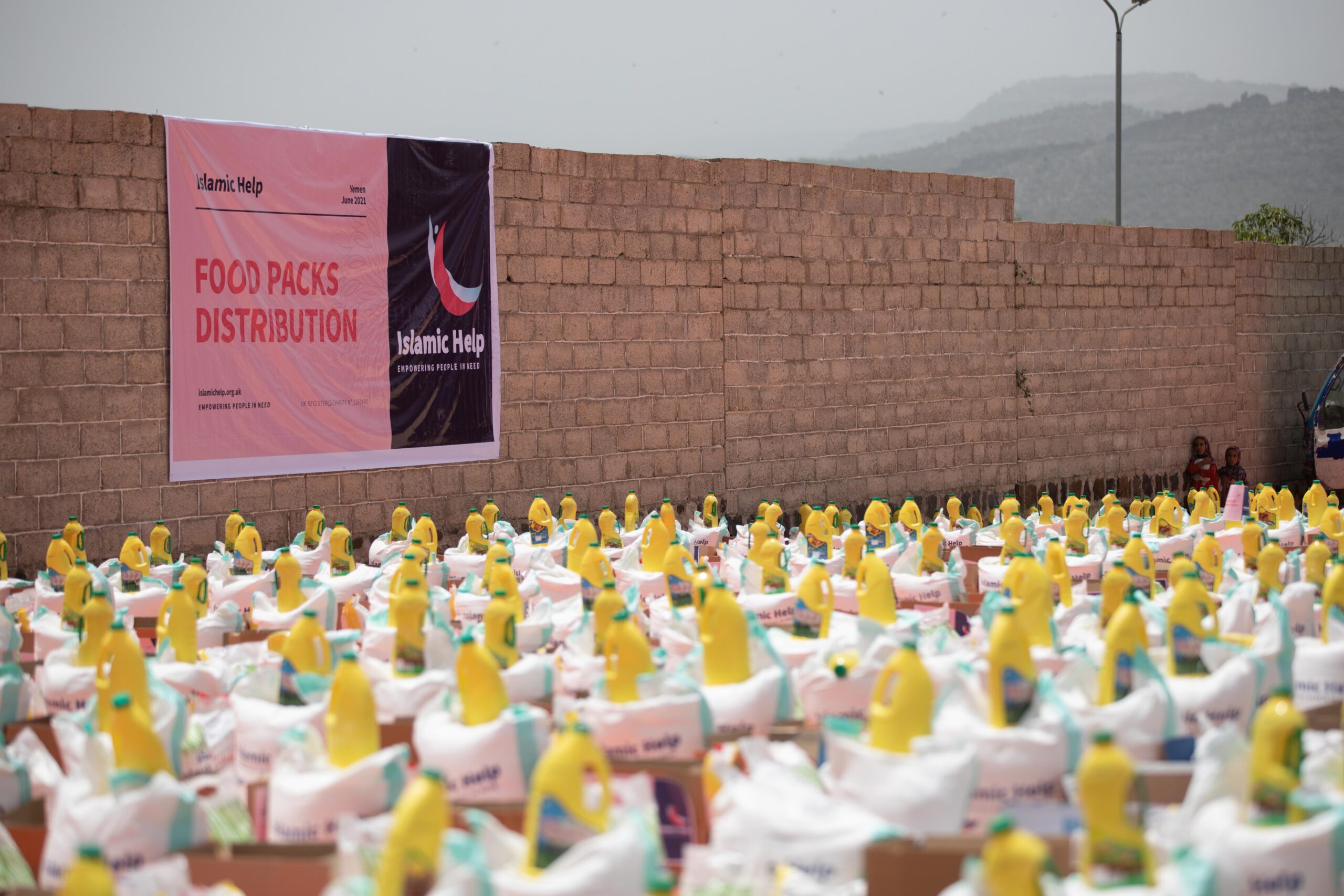
Islamic Help’s Food & Social Programme addresses this reality by supporting families facing long-term food insecurity. Alongside emergency food distributions, the programme delivers sustained food assistance that helps households cope with chronic hardship while protecting dignity and wellbeing.

This article explores how long-term hunger develops, why ongoing food support is essential, and how Islamic Help delivers responsible food aid that stabilises families beyond immediate emergencies.
بِسْمِ ٱللَّهِ ٱلرَّحْمَٰنِ ٱلرَّحِيمِ

“The example of those who spend their wealth in the way of Allah is like a seed that sprouts into seven ears, each bearing one hundred grains.”

Understanding long-term food insecurity

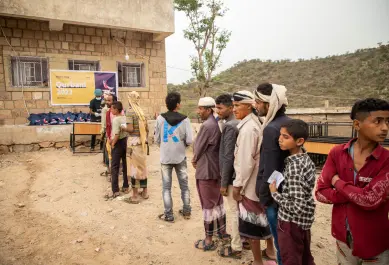
Long-term food insecurity occurs when families consistently lack reliable access to sufficient, nutritious food. Unlike short-term crises, this form of hunger develops gradually and can persist for years, driven by structural challenges such as poverty, conflict, and economic instability.

In many communities, wages do not keep pace with food prices, leaving households unable to meet basic needs. In displacement settings, families may be prohibited from working or lack opportunities to earn an income, increasing reliance on aid.

Long-term food insecurity weakens health, disrupts education, and deepens poverty. Addressing it requires consistent, reliable support rather than one-off interventions.

The impact of sustained hunger on families

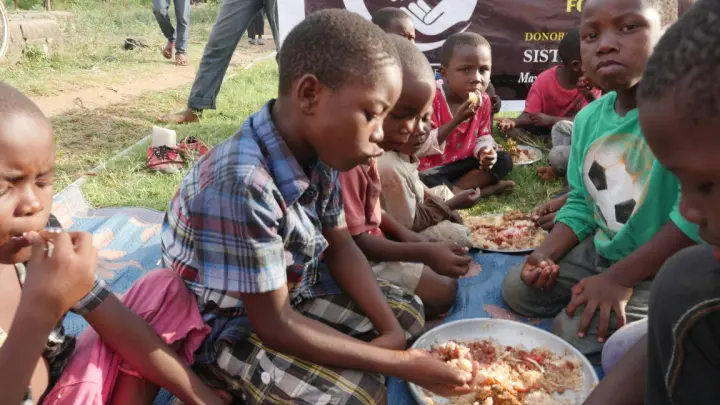
Prolonged hunger affects every aspect of family life. Adults may skip meals to feed children, while children experience impaired growth, weakened immunity, and difficulty concentrating in school.

Households facing chronic food shortages often resort to negative coping strategies, such as reducing meal quality, selling essential assets, or withdrawing children from education. These measures provide short-term relief but deepen vulnerability over time.

Without sustained food support, families remain trapped in cycles of hardship that undermine resilience and long-term stability.

IMG_3340
IH FP 3
Copy of IMG_9574
Copy of 192A0356
IMG_0285

Islamic Help’s approach to long-term food support

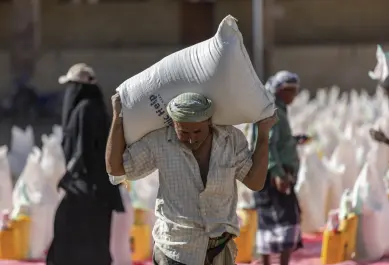
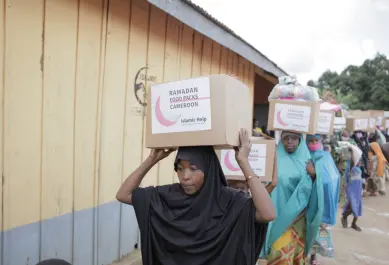
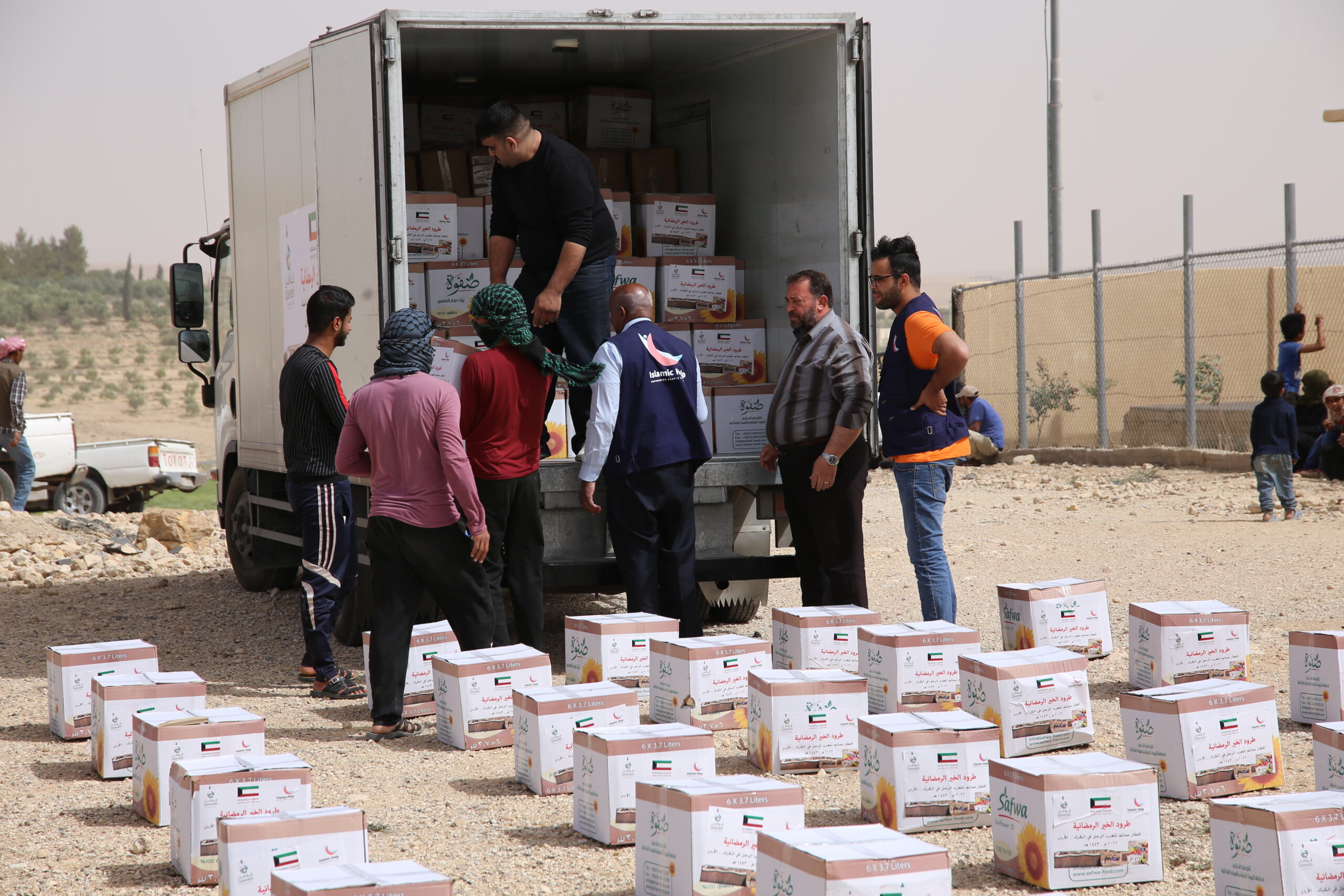
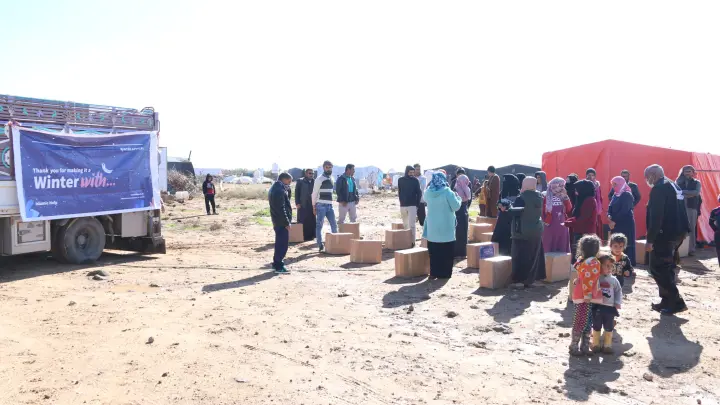
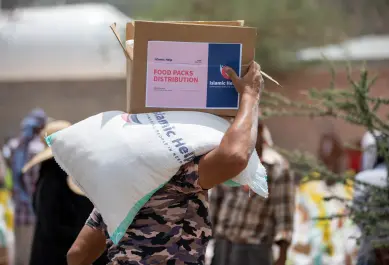
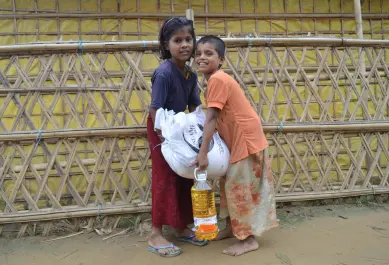
Islamic Help’s Food & Social Programme delivers long-term food assistance to households facing ongoing hardship. These interventions are designed to complement emergency aid by providing consistent nutritional support over extended periods.

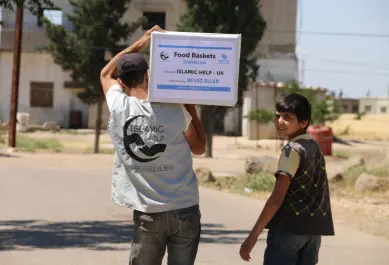
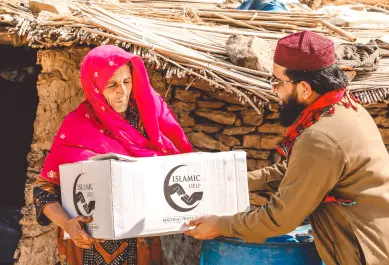
Long-term food projects may include regular food parcel distributions, targeted assistance for vulnerable groups, and community-based support mechanisms. By maintaining predictable support, families are better able to plan and manage daily needs.

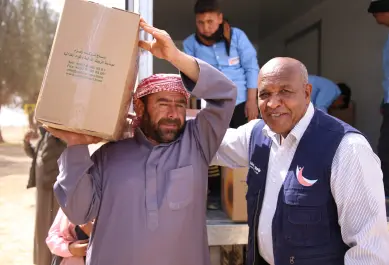
Projects are delivered through local partners who understand community dynamics, ensuring aid reaches those most affected by chronic food insecurity.

Supporting vulnerable households with dignity

Long-term food support must balance effectiveness with respect. Islamic Help prioritises dignity in all food assistance, recognising that recipients may rely on support for extended periods.

Distributions are organised to minimise stigma and ensure fairness. Households receive assistance in ways that respect privacy and cultural norms, helping preserve self-respect even during prolonged hardship.

This approach reinforces trust between communities and aid providers, making support more accessible and sustainable.

Food insecurity in displacement and urban poverty

Long-term food insecurity is particularly prevalent among displaced populations and low-income urban communities. Refugees and internally displaced families often face legal and economic barriers to employment, increasing dependence on aid.

In urban settings, rising living costs and limited social protection systems can push working families into chronic hunger. Even those with some income may struggle to afford food consistently.

Islamic Help’s long-term food support addresses these contexts by targeting households most affected by persistent poverty and displacement-related vulnerability.

Protecting health through sustained nutrition

Consistent access to food is essential for maintaining health over time. Chronic undernutrition increases susceptibility to illness and complicates recovery from disease, particularly among children and elderly people.

Long-term food assistance helps stabilise nutritional intake, reducing health risks and supporting overall well-being. By preventing deterioration, food support also reduces pressure on healthcare systems in vulnerable communities.

Nutrition stability enables families to focus on education, work, and recovery rather than constant survival.

Social stability and community resilience

Food security is closely linked to social stability. When families can meet basic nutritional needs, stress levels decrease, and households are better able to cope with external shocks.

Long-term food aid contributes to community resilience by reducing competition for resources and preventing the escalation of hardship. Stable food access helps maintain social cohesion, particularly in densely populated or displacement-affected areas.

Islamic Help’s Food & Social Programme recognises food security as a cornerstone of broader social wellbeing.

Accountability in sustained food programmes

Delivering long-term food support requires careful oversight. Islamic Help maintains accountability through monitoring, reporting, and partner management to ensure aid remains effective and appropriate.

Regular assessments help determine ongoing need and adjust support as conditions change. Transparency with donors and communities helps maintain trust throughout prolonged interventions.

This accountability is essential for responsible humanitarian action and long-term programme success.

Integrating food support with social assistance

Long-term food aid is most effective when integrated with wider social support. Islamic Help’s Food & Social Programme aligns food assistance with other interventions that address vulnerability.

By coordinating food aid with social care, seasonal support, and community-based initiatives, the programme helps reduce dependency and support pathways toward stability.

This integrated approach recognises that hunger is not an isolated issue, but part of a broader pattern of social hardship.

Why long-term food aid matters

While emergency food aid saves lives, long-term food support sustains them. Families facing chronic hunger need reliable assistance that acknowledges the ongoing nature of their struggle.

Islamic Help’s Food & Social Programme provides this support through consistent, dignified food assistance. By addressing hunger beyond emergencies, the programme helps families maintain health, stability, and hope in the face of prolonged hardship.

Long-term food aid is not about dependency; it is about protecting dignity and enabling resilience when circumstances leave families with few alternatives.

FAQs:

  • What is the difference between emergency and long-term food aid?
    Emergency food aid addresses immediate hunger during crises, while long-term food aid supports families facing ongoing food insecurity. Sustained assistance helps households cope with chronic poverty or displacement when hunger is not caused by a single, short-term emergency.
  • Who needs long-term food support the most?
    Families affected by prolonged poverty, displacement, unemployment, or rising food costs often require long-term food support. These households may struggle to consistently access sufficient food, making ongoing assistance essential to protect their health and stability.
  • How does Islamic Help deliver long-term food assistance?
    Islamic Help delivers long-term food assistance through regular food distributions and targeted support for vulnerable households. Projects are implemented with local partners to ensure aid reaches those most affected by chronic food insecurity in a responsible, dignified manner.
  • Does long-term food aid create dependency?
    When delivered responsibly, long-term food aid does not create dependency. Instead, it stabilises households during prolonged hardship, allowing families to meet basic needs and reduce harmful coping strategies while broader recovery or support options are explored.
  • How is accountability maintained in long-term food programmes?
    Islamic Help maintains accountability through monitoring, reporting, and ongoing assessments. This oversight ensures food assistance remains appropriate, effective, and transparent, building trust with donors and communities throughout sustained interventions.

updates that matter

Empower my Inbox

Emergency Food Aid: How Timely Support Protects Lives in Crisis

Emergency Food Aid: How Timely Support Protects Lives in Crisis
Latest News

Emergency Food Aid: How Timely Support Protects Lives in Crisis

Learn how emergency food aid delivers rapid, life-saving support in crises, protecting health, preserving dignity, and stabilising vulnerable families facing sudden and severe food shortages.

In humanitarian crises, access to food can disappear with devastating speed. Conflict, displacement, economic collapse, and environmental shocks interrupt supply chains and livelihoods, leaving families without the means to meet even their most basic needs. When food becomes scarce, hunger quickly turns into a life-threatening emergency.

Islamic Help’s Food & Social Programme responds to these situations by delivering emergency food aid to vulnerable individuals and families. By providing timely food assistance, the programme helps protect health, preserve dignity, and stabilise households during periods of extreme hardship.

This article explains why emergency food aid is critical in crises, how food insecurity develops in humanitarian settings, and how Islamic Help delivers responsible, dignified food support when people need it most.

بِسْمِ ٱللَّهِ ٱلرَّحْمَٰنِ ٱلرَّحِيمِ

“The example of those who spend their wealth in the way of Allah is like a seed that sprouts into seven ears, each bearing one hundred grains.”

Why food is a first priority in emergencies

Food is essential for survival, yet in crises it is often one of the first needs to go unmet. Conflict and displacement disrupt markets, destroy income sources, and restrict movement, making it difficult or impossible for families to access food.

Without sufficient nutrition, physical health deteriorates rapidly. Children, pregnant women, elderly people, and those with existing health conditions are particularly vulnerable to the effects of hunger. Prolonged food shortages increase the risk of malnutrition, illness, and long-term developmental harm.

Emergency food aid directly addresses these risks. By ensuring households have access to basic nutrition, food assistance helps prevent the immediate escalation of hunger into a wider health crisis.

How humanitarian crises create food insecurity

Food insecurity in humanitarian settings is rarely caused by a single factor. Armed conflict damages infrastructure and agriculture, inflation reduces purchasing power, and displacement separates families from land and livelihoods.

In urban crises, rising food prices can make basic staples unaffordable. In rural areas, drought or insecurity may destroy harvests or prevent planting altogether. Refugees and displaced families often rely entirely on external assistance, as they have no access to income or markets.

These overlapping pressures mean that food insecurity can develop quickly and persist long after the initial emergency. Emergency food aid provides a critical safety net during these periods of instability.

IMG_0202
IMG_8630
_DSC0467 (1)
Copy of 192A1526
DSC_0623

Islamic Help’s approach to emergency food aid

Islamic Help’s Food & Social Programme delivers emergency food aid through carefully planned and locally implemented interventions. Food distributions are designed to meet immediate needs while respecting the dignity of recipients.

Emergency food assistance typically includes staple foods that support household nutrition for a defined period. In some contexts, cooked meal distributions are used where families lack access to cooking facilities or fuel.

Projects are delivered through trusted partners and local teams who understand community needs and conditions. This approach ensures food reaches those most in need and is distributed fairly and efficiently.

Reaching families affected by conflict and displacement

Conflict and displacement are among the most significant drivers of emergency food need. Families forced to flee their homes often leave behind livelihoods, savings, and access to markets.

Islamic Help delivers emergency food aid to displaced populations living in camps, informal settlements, and host communities. Food distributions help stabilise households during the most uncertain stages of displacement, reducing the risk of malnutrition and further vulnerability.

By responding quickly, emergency food aid helps families cope with sudden loss while longer-term support options are assessed.

Protecting health through nutrition support

Food aid is closely linked to health outcomes. In crisis settings, hunger weakens immune systems and increases susceptibility to disease. Children experiencing food shortages are more likely to suffer from infections and developmental challenges.

Emergency food assistance helps protect physical health by ensuring families receive sufficient calories and basic nutrition. This support is particularly important for children and pregnant or breastfeeding women, whose nutritional needs are higher.

By addressing hunger early, food aid reduces pressure on healthcare systems and supports overall community wellbeing during emergencies.
Dignity and fairness in food distribution

Delivering food aid responsibly requires more than logistics. It requires respect for the dignity of those receiving assistance. Islamic Help’s Food & Social Programme prioritises ethical delivery and safeguarding in all food distributions.

Distributions are organised to minimise stigma, ensure fairness, and protect vulnerable individuals. Beneficiaries are treated with respect, and assistance is provided without discrimination.

This dignity-first approach recognises that food aid is not simply a transaction, but a vital form of support during moments of profound hardship.

Accountability and transparency in emergency food aid

Trust is essential in humanitarian food programmes. Donors need confidence that assistance reaches intended beneficiaries, and communities need assurance that distributions are fair and consistent.

Islamic Help maintains accountability through project monitoring, reporting, and partner oversight. Emergency food aid projects are documented and reviewed to ensure effectiveness and integrity.

Clear communication about how food aid is delivered helps build trust and supports responsible humanitarian action.

Emergency food aid as part of a wider response

While emergency food aid is critical, it is not a standalone solution. Islamic Help’s Food & Social Programme integrates food assistance within a broader framework of social support and humanitarian response.

Emergency food distributions often serve as the first step in stabilising households, allowing families to address other urgent needs such as shelter, healthcare, and protection. This integrated approach recognises the interconnected nature of humanitarian crises.

By coordinating food aid with other forms of support, the programme helps reduce long-term vulnerability and supports pathways toward recovery.

Why timely food aid saves lives

In emergencies, timing is everything. Delayed food assistance can result in malnutrition, illness, and irreversible harm, particularly for children. Rapid response prevents these outcomes and preserves life.

Islamic Help’s Food & Social Programme prioritises timely delivery, working with local partners to respond as quickly as access and conditions allow. This responsiveness ensures food reaches families before hunger escalates into crisis.

Emergency food aid saves lives not only by providing nutrition but by restoring a measure of stability and hope in moments of extreme uncertainty.

Sustaining compassion during crisis

Humanitarian emergencies test the resilience of individuals and communities. Access to food during these times is a fundamental expression of compassion and solidarity.
Through its emergency food aid work, Islamic Help supports families facing the most difficult circumstances. By delivering food with dignity, accountability, and care, the Food & Social Programme helps protect lives and uphold human dignity during crises.
Emergency food aid remains a cornerstone of humanitarian response, ensuring that when everything else is uncertain, families are not left to face hunger alone.
FAQs:

  • Why is emergency food aid so important during crises?
    Emergency food aid is vital because crises can quickly disrupt access to food. Conflict, displacement, and economic shocks can leave families without income or markets. Timely food assistance prevents hunger from escalating into malnutrition, illness, and long-term harm, particularly for children and other vulnerable groups.
  • Who receives emergency food aid from Islamic Help?
    Emergency food aid is provided to vulnerable individuals and families affected by conflict, displacement, poverty, or sudden crises. Priority is given to households facing immediate food insecurity, including displaced families, children, elderly people, and others unable to meet basic nutritional needs.
  • What type of food support is provided in emergencies?
    Emergency food support typically includes staple food items designed to meet household nutritional needs for a limited period. In some situations, cooked meals are provided when families lack cooking facilities or fuel. Assistance is adapted to local conditions and needs.
  • How does Islamic Help ensure food aid is distributed fairly?
    Islamic Help works with trusted local partners to identify needs and organise distributions responsibly. Safeguarding and monitoring measures help ensure food reaches intended beneficiaries fairly, without discrimination, while protecting dignity and accountability throughout the process.
  • Is emergency food aid only short-term support?
    Emergency food aid addresses immediate hunger, but it is often part of a wider humanitarian response. By stabilising households during crises, food assistance creates space for longer-term support, helping families recover and reduce vulnerability over time.

updates that matter

Empower my Inbox

Water Hand Pump vs Water Well: Which Should You Donate?

Water Hand Pump vs Water Well: Which Should You Donate?
Latest News

Water Hand Pump vs Water Well: Which Should You Donate?

Compare water hand pumps and wells to understand differences in cost, scale, and impact, helping you choose the most effective donation for lasting community benefit.

When donating water charity, many people ask the same question: should I fund a water hand pump, a community water well, or a larger water project? Each option delivers clean water, but they differ in scale, cost, and impact.

Through its Water & Sanitation programme, Islamic Help delivers a range of water solutions to meet diverse community needs. This guide compares the main water project options supported by Islamic Help, helping you choose the right project based on your intention, budget, and desired impact, while ensuring your donation creates lasting benefit.

بِسْمِ ٱللَّهِ ٱلرَّحْمَٰنِ ٱلرَّحِيمِ

“The example of those who spend their wealth in the way of Allah is like a seed that sprouts into seven ears, each bearing one hundred grains.”

What is a water hand pump, and who does it help?

A water hand pump is a simple, manually operated water source installed where groundwater is accessible close to the surface. It is typically designed to serve a household or a small cluster of families living in close proximity.

Islamic Help installs water hand pumps in areas where this solution is appropriate, often in rural communities with shallow water tables. Hand pumps are particularly effective where electricity or fuel-powered systems are not viable.

The primary benefit of a hand pump is proximity. Families no longer need to walk long distances for water, reducing physical strain and improving daily safety. Children benefit through better health, and women regain time previously spent collecting water.

Hand pumps are among the most affordable ways to provide water charity and are commonly chosen by donors seeking Sadaqah Jariyah on a modest budget.

What is a community water well, and how is it different?

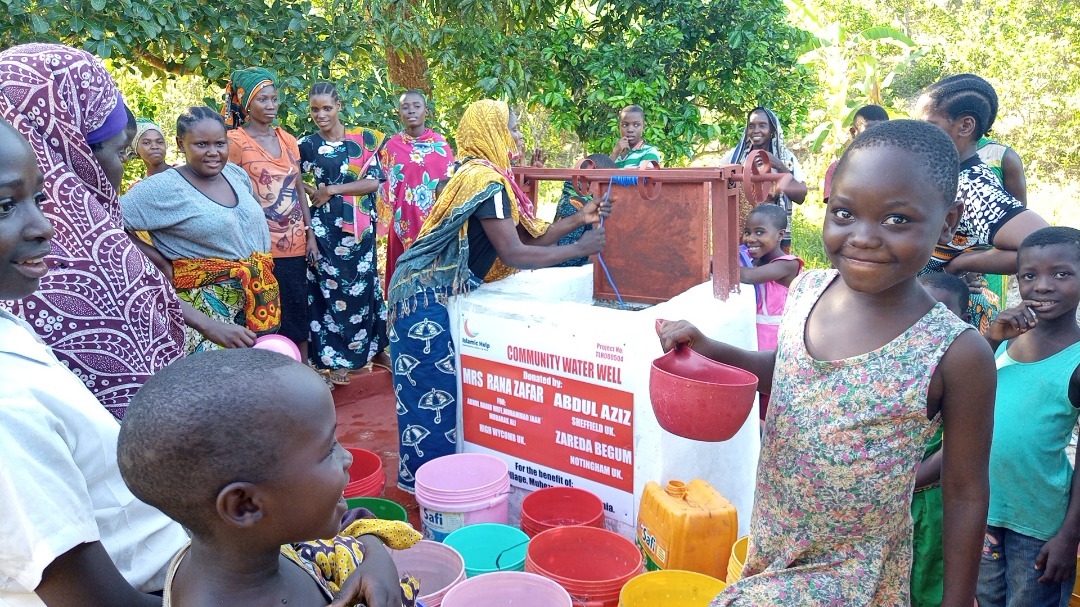
A community water well is a larger, shared water source designed to serve an entire village or neighbourhood. These wells are usually drilled deeper than hand pumps to access more reliable aquifers.

Islamic Help delivers community water wells in regions where population density and water demand exceed what a hand pump can support. These wells provide water for drinking, cooking, hygiene, and community use throughout the day.

Community wells benefit many families at once. They reduce disease across entire populations, improve school attendance, and support local stability. Because they serve more people, they typically require more construction, planning, and funding.

For donors, community water wells offer a balance between scale and personal impact, making them a popular choice for Sadaqah Jariyah.

179389286611 (2)
0U4A5884
IMG_1796
lslamic Help (1 of 1)-3
Well 1a

What are large-scale water projects?

Large-scale water projects are designed for high-demand settings such as schools, hospitals, refugee camps, or densely populated communities. These projects may include storage tanks, solar-powered pumps, treatment systems, or other infrastructure.

Islamic Help supports large-scale water solutions where smaller systems are insufficient. These projects often serve hundreds or thousands of people and may protect essential services such as healthcare facilities.

Because of their complexity, large-scale projects usually require higher budgets and longer delivery timelines. They are often funded collectively through pooled donations or supported by donors able to contribute larger amounts.

These projects create significant, long-term impact but are best suited for donors focused on wide-reaching community benefit rather than individual households.

How do cost and scale compare between options?

Cost is often the first consideration for donors. Water hand pumps are the most affordable option, making them accessible to many donors. Community water wells require higher funding but serve far more people.

Large-scale water projects involve the highest costs due to infrastructure, equipment, and technical requirements. However, their cost per beneficiary can be very efficient given the number of people served.

Islamic Help offers flexibility, allowing donors to fully fund a project or contribute to pooled funding. This ensures donors at every level can participate in meaningful water charity.

The key is not choosing the “cheapest” option, but the option that best fits the community’s needs and your charitable intention.

Which option creates the most Sadaqah Jariyah?

All three options, hand pumps, wells, and large-scale projects, can qualify as Sadaqah Jariyah when they provide ongoing benefit.

Hand pumps offer continuous benefit to a small group of families. Community wells extend that benefit to entire villages. Large-scale projects amplify the benefit further by supporting institutions and large populations.

Islamic Help designs all water projects with sustainability in mind, ensuring that whichever option you choose continues to serve people over time.

The most rewarding Sadaqah Jariyah is the one given sincerely and delivered responsibly.

How should you choose the right water project?

Choosing the right project depends on intention, capacity, and impact preference. Some donors prefer completing a project independently, while others are comfortable contributing toward shared initiatives.

If your goal is to help a family directly with a modest budget, a hand pump may be ideal. If you want to uplift an entire community, a water well offers a broader reach. If you wish to support essential services or large populations, large-scale projects may be most suitable.

Islamic Help provides guidance across all options, ensuring donors understand how their contributions will be used and the impact they will have.

How does Islamic Help support donors across all water projects?

Islamic Help prioritises trust and transparency. For all water projects paid in full, delivery is guaranteed. Donors may give in their own name or in honour of a loved one, with plaque placement where appropriate.

Once a project is completed, Islamic Help provides a full PDF feedback report with images of the installed hand pump or water well. This accountability applies across water project types and helps donors give with confidence.

Through experience, local partnerships, and clear reporting, Islamic Help ensures every water donation delivers real benefit.

FAQs:

  • What is the difference between a water hand pump and a water well?
    A water hand pump typically serves a household or a small group of families and draws from shallow groundwater. A community water well is larger, drilled deeper, and designed to serve many families or an entire village with more reliable, higher-volume water access.
  • Which water project helps the most people?
    Large-scale water projects and community water wells help the most people because they serve large populations. Hand pumps provide essential support to fewer families, while wells and infrastructure projects extend benefits across villages, schools, or public facilities, depending on the project design.
  • Is a water hand pump still considered Sadaqah Jariyah?
    Yes. As long as the hand pump continues to provide water over time, it is considered Sadaqah Jariyah. Each repeated use brings ongoing benefit, making it a meaningful option for donors seeking lasting reward within a smaller budget.
  • Can I contribute to a water well without funding the full cost?
    Yes. Islamic Help allows donors to contribute any amount toward community water wells. Partial donations are pooled with others to complete full projects, ensuring every contribution plays a role in delivering a functional water source.
  • How do I know which project Islamic Help will deliver?
    Islamic Help selects project types based on community need, feasibility, and sustainability. Donors can choose a project category and, in some cases, a preferred country, while final allocation ensures that water reaches the most appropriate and high-need locations.

updates that matter

Empower my Inbox

Water Charity FAQs: Your Questions Answered

Water Charity FAQs: Your Questions Answered
Latest News

Water Charity FAQs: Your Questions Answered

Get clear answers to common water charity questions, including project impact, proof, Zakat eligibility, and longevity, helping you give confidently and ensure lasting benefit.

When donating to a water charity, many people have important questions before they give. How long does a water project take? Will you receive proof? Can water be given as Zakat? How do you know the project will last?

This guide answers the most common water charity questions, using Islamic Help’s real delivery model and water projects as reference points. It is designed to help donors give with clarity, confidence, and peace of mind, ensuring your charity reaches those in need and delivers lasting impact.

بِسْمِ ٱللَّهِ ٱلرَّحْمَٰنِ ٱلرَّحِيمِ

“The example of those who spend their wealth in the way of Allah is like a seed that sprouts into seven ears, each bearing one hundred grains.”

How long does it take to deliver a water project?

Water project timelines vary depending on the type of project and on-site conditions. Smaller projects, such as water hand pumps, can often be delivered more quickly than large community wells or infrastructure systems.

Islamic Help begins delivery once a project is fully funded and allocated. Site assessment, materials, and local coordination are required before construction begins. In some regions, seasonal access or security conditions may affect timelines.

For donors, it is important to understand that water projects prioritise sustainability over speed. Rushing delivery can compromise quality. Islamic Help balances urgency with responsible implementation to ensure water sources remain functional in the long term.

Once completed, donors are informed through a structured feedback process.

How do I know a water charity project is genuine?

Trust is essential when donating to charity. A genuine water project should have clear pricing, defined delivery processes, and transparent reporting.

Islamic Help provides clarity on project types, costs, and expected outcomes. Water projects are delivered through established field teams working with local partners who understand community needs.

For projects paid in full, Islamic Help guarantees delivery and provides a full PDF feedback report with images showing the completed well or pump. This documentation confirms that the project exists and is benefiting real people.

Charities that cannot explain their delivery model or provide proof should be approached cautiously.

584A8865
123648540_206167627559706_8934793466495756298_o
lslamic Help (1 of 2)
lslamic Help (1 of 1)-2
0U4A5884

Will I receive proof or feedback after donating?

Yes. Transparency is central to Islamic Help’s approach to water charity. Donors often want to see how their money was used and who benefited from it.

For water projects paid in full, Islamic Help provides a detailed PDF feedback report after completion. This includes images of the installed hand pump or water well, location information, and confirmation that the project is operational.

For pooled or emergency projects, donors receive impact updates that explain how funds were used and the scale of benefit delivered.

This reporting helps donors give with confidence and reinforces accountability.

Can I choose where my water donation is delivered?

Islamic Help allows donors to select specific project types and, in many cases, indicate a preferred country. However, exact locations are determined by need, feasibility, and field assessments.

This approach ensures fairness and effectiveness. It prevents duplication, ensures water reaches high-need communities, and allows projects to be delivered where they will have the greatest impact.

For fully funded projects, donors are informed of the country and community once the project is allocated. This balances donor choice with responsible humanitarian planning.

Can water charity be given as Zakat?

In some cases, water charity can be Zakat-eligible. This applies when the project directly benefits people who qualify under Zakat categories, such as the poor, displaced, or those facing hardship.

Islamic Help allocates Zakat carefully to ensure compliance with Islamic guidelines. Not all water projects automatically qualify, so donor intention and correct allocation are important.

If donors are unsure, Islamic Help provides guidance on whether a specific water donation can be treated as Zakat, Sadaqah, or Sadaqah Jariyah.

How does Islamic Help ensure water projects last?

Longevity is critical for a water charity. A project that fails early does not deliver true value or ongoing benefit.

Islamic Help designs water projects with sustainability in mind. This includes appropriate technology selection, community involvement, and basic maintenance planning. Local teams are engaged to support long-term functionality.

By focusing on durable solutions and community ownership, Islamic Help helps ensure water sources remain usable for years, making them genuine Sadaqah Jariyah.

What happens if something goes wrong with a water project?

Water projects operate in challenging environments, and unforeseen issues can arise. These may include seasonal changes, access restrictions, or technical problems.

Islamic Help plans for such risks through assessment and contingency measures. If a site proves unsuitable or a technical issue occurs, adjustments are made to ensure the donation still results in a functional water source.

Donor funds are protected, and the charity’s intention is honoured through responsible reallocation or remediation, as needed.

FAQs:

  • How long does it take to build a water well with Islamic Help?
    Delivery times vary depending on project type, location, and access conditions. Smaller projects may be completed sooner, while larger wells take longer. Islamic Help prioritises responsible delivery, and once a project is completed, donors receive confirmation through a detailed feedback report with images.
  • Will Islamic Help provide proof that my water project was completed?
    Yes. For water projects paid in full, Islamic Help guarantees delivery and provides a full PDF feedback report. This includes images of the completed hand pump or water well, confirmation of installation, and details about the community benefiting from the project.
  • Can I choose the country for my water donation?
    In many cases, donors can indicate a preferred country. Final allocation is based on need, feasibility, and project planning. Islamic Help ensures water projects are delivered where they have the greatest impact while keeping donors informed of the final location.
  • Can water charity through Islamic Help be given as Zakat?
    Yes, in some cases. Water projects can be Zakat-eligible when they directly benefit people who qualify under Zakat categories, such as the poor or displaced. Islamic Help carefully allocates Zakat funds to ensure compliance with Islamic guidelines and with donors’ intentions.
  • How does Islamic Help ensure that water projects last in the long term?
    Islamic Help designs water projects with sustainability in mind, including appropriate site selection, community involvement, and maintenance planning. Local teams support long-term functionality, so water sources continue to benefit communities for years, making the charity truly ongoing.

updates that matter

Empower my Inbox

Donating a Water Well in Someone’s Name

Donating a Water Well in Someone’s Name
Latest News

Donating a Water Well in Someone’s Name

Learn how donating a water well in someone’s name creates meaningful, lasting impact, honouring loved ones while providing life-saving clean water to communities in need.

Many donors want their charity to carry a deeper meaning, to honour a loved one, remember someone who has passed away, or mark an important life event. Donating a water well in someone’s name offers a powerful way to do this.

Through its Water & Sanitation programme, Islamic Help allows donors to dedicate water projects in honour or memory of a loved one, transforming remembrance into real, life-saving impact. This guide explains how donating a water well in someone’s name works, why it is considered Sadaqah Jariyah, and how Islamic Help ensures your dedication creates lasting benefit.

بِسْمِ ٱللَّهِ ٱلرَّحْمَٰنِ ٱلرَّحِيمِ

“The example of those who spend their wealth in the way of Allah is like a seed that sprouts into seven ears, each bearing one hundred grains.”

Why do people donate water wells in someone’s name?

Donating in someone’s name is a way to turn personal intention into public benefit. When a water project is dedicated to a loved one, every use of that water becomes a form of ongoing charity connected to their name.

Many donors choose to give water in memory of parents, spouses, or family members who have passed away. Others donate to celebrate milestones such as a birth, marriage, or recovery from illness. In all cases, the intention is the same: to create a legacy of good that continues beyond a single moment.

Water wells are particularly meaningful for this purpose because they support daily life. Communities depend on them continuously, which means dedication is not symbolic alone; it is lived out every day through access to clean water.

Through Islamic Help, this intention is honoured by ensuring the project delivers real, sustained benefit to families in need.

How does donating a water well in someone’s name work?

Islamic Help makes the process of dedicating a water project clear and transparent. When you choose to donate a water well or hand pump, you can specify that the project is in honour or memory of a loved one.

Where appropriate, a plaque is placed at the project site displaying the chosen name or dedication. This plaque serves as a visible reminder of the charity and connects the donor’s intention to the community benefiting from the water source.

Once the project is completed, Islamic Help provides a full PDF feedback report, including images of the installed well or pump. This report confirms delivery and allows donors to see exactly how their dedication has been put into practice.

This structured process ensures that donors can give with confidence and clarity.

0U4A5740
0U4A5794
20220314_180214
20230510_110053
photo_2023-02-02_16-00-04

Why is a dedicated water well considered Sadaqah Jariyah?

Sadaqah Jariyah is a charity that continues to benefit people over time. A water well naturally fits this definition, as it is used repeatedly by families for drinking, cooking, washing, and hygiene.

When a water well is donated in someone’s name, the ongoing benefit becomes a continuous charity associated with that person. As long as the water source remains in use, the reward can continue.

Islamic Help designs water projects with longevity in mind, ensuring that wells and pumps are delivered responsibly and maintained by communities. This focus on sustainability helps ensure that the Sadaqah Jariyah truly lasts.

For donors seeking meaningful, ongoing charity, dedicating a water project offers both spiritual significance and tangible impact.

Who benefits from a dedicated water well?

The beneficiaries of dedicated water wells are families living in poverty, displacement, or crisis. These communities often lack access to safe water and rely on unsafe or distant sources.

When Islamic Help delivers a water well, entire communities benefit. Children experience better health and school attendance, women save time and regain safety, and families gain stability through reliable water access.

The dedication does not change who benefits — it changes how the benefit is remembered. The community receives clean water, and the donor’s intention becomes part of the project’s story.

This shared benefit reflects the Islamic principle that charity should uplift others while remaining sincere.


How does Islamic Help ensure delivery and accountability?

Islamic Help prioritises transparency and trust. For all water projects paid in full, delivery is guaranteed. Each project follows a clear process from assessment to installation.

Once completed, donors receive a detailed PDF feedback report with images of the installed water source. This confirms that the project has been delivered as promised and shows the people benefiting from it.

Islamic Help works with local teams to ensure water projects are appropriate, safe, and sustainable. This accountability allows donors to give confidently, knowing their dedication results in real impact.

How can you choose the right water project to dedicate?

The right project depends on your intention and capacity. Smaller donations may fund hand pumps, while larger donations can fully fund community water wells or contribute toward shared projects.

Islamic Help provides guidance on available options, allowing donors to choose projects that align with their goals. Whether you fully fund a project or contribute toward one, the dedication remains meaningful and impactful.

By choosing a trusted charity with experience in water delivery, donors ensure that their dedication translates into lasting benefit.

FAQs:

  • Can I donate a water well in memory of someone who has passed away?
    Yes. Islamic Help allows donors to dedicate water projects in memory of a loved one. When given with sincere intention, the ongoing benefit of the water source becomes Sadaqah Jariyah for the deceased, providing a lasting reward while helping vulnerable families access clean and safe water.
  • Will the person’s name appear on the water well or pump?
    Where appropriate, Islamic Help installs a plaque at the project site displaying the chosen name or dedication. This plaque links the donor’s intention to the water source and allows the community to recognise the charity that helped provide clean water.
  • Will I receive proof after the water project is completed?
    Yes. For water projects paid in full, Islamic Help provides a comprehensive PDF feedback report upon completion. This includes images of the installed well or hand pump, confirmation of delivery, and information about the community benefiting from the project.
  • Can I donate a water project in someone’s name as a gift?
    Yes. Many donors dedicate water projects to celebrate occasions such as births, marriages, or other milestones. Donating to a water project through Islamic Help offers a meaningful alternative to traditional gifts, combining remembrance with life-saving impact for families in need.
  • What if I prefer to keep my donation anonymous?
    Islamic Help respects donor preferences. If you choose not to include a name on the plaque, this can be arranged. The project will still be delivered and reported as normal, and the charity’s reward will remain sincere.

updates that matter

Empower my Inbox

Emergency Water Aid: How Water Saves Lives in Crisis.

Emergency Water Aid: How Water Saves Lives in Crisis.
Latest News

Emergency Water Aid: How Water Saves Lives in Crisis

Learn how emergency water aid delivers urgent, life-saving clean water in crises, protecting vulnerable families facing conflict, displacement, floods, and drought when access disappears overnight.

In emergencies, access to clean water can disappear overnight. Conflict, displacement, floods, and drought leave families without safe drinking water, placing lives at immediate risk. In these situations, water becomes the first and most urgent humanitarian need.

Through its Emergency Water Aid programmes, Islamic Help delivers urgent clean water to families affected by crisis, including in Gaza, Yemen, and refugee camps in Bangladesh. This guide explains how emergency water aid works, why it is vital in Islam, and how Islamic Help turns donations into immediate, life-saving relief when people need it most.

بِسْمِ ٱللَّهِ ٱلرَّحْمَٰنِ ٱلرَّحِيمِ

“The example of those who spend their wealth in the way of Allah is like a seed that sprouts into seven ears, each bearing one hundred grains.”

Why is water the first priority in emergencies?

Water is essential for survival. While humans can survive several days without food, the body can only function for a short time without water. In emergency situations, dehydration can become fatal within hours, especially for children, the elderly, and the sick.

Beyond thirst, lack of clean water quickly leads to disease. In crowded conditions such as refugee camps or temporary shelters, unsafe water spreads diarrhoea, cholera, and other infections at alarming rates. These illnesses often claim more lives than the initial disaster itself.

This is why Islamic Help prioritises water in emergency response. By restoring access to safe water as quickly as possible, further loss of life can be prevented, and communities stabilised before additional health crises take hold.

What situations require emergency water aid?

Emergency water aid is required whenever normal water systems collapse. This commonly occurs during armed conflict, natural disasters, and prolonged displacement.

In conflict zones such as Gaza, water infrastructure is often damaged or rendered unusable due to power outages and bombardment. Families may have no access to running water for extended periods. In these conditions, emergency water delivery becomes essential for survival.

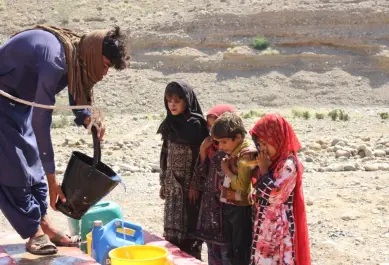
In countries like Yemen, years of conflict have destroyed water networks, forcing communities to rely on water trucking or unsafe sources. Drought-affected regions also face emergencies when wells dry up, and livestock and families compete for limited water.

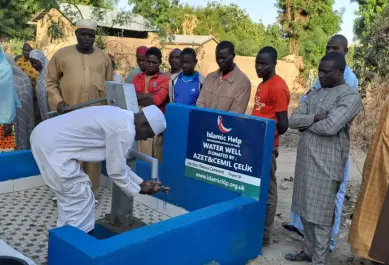
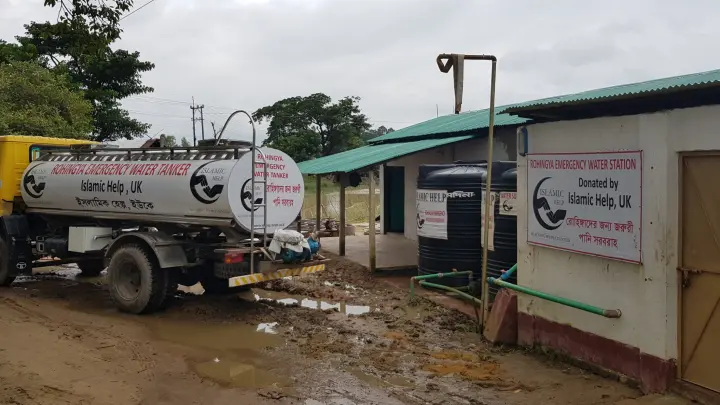
Refugee camps, including those housing Rohingya refugees in Bangladesh, often depend entirely on emergency water systems due to overcrowding and limited natural resources. Islamic Help responds in all of these contexts.

IMG_0323
WhatsApp Image 2022-12-01 at 12.03.49
IMG_9724
584A8865
lslamic Help (1 of 2)

How does Islamic Help deliver emergency water aid?

Islamic Help delivers emergency water aid through several practical methods, depending on the situation on the ground. The most common approach is water trucking, where clean water is transported by tankers from safe sources directly to affected communities.

In camps and urban emergencies, Islamic Help installs temporary storage tanks or water bladders so families can collect water safely. Where possible, purification measures are used to ensure water quality meets health standards.

Emergency water delivery is often combined with hygiene support, helping prevent disease outbreaks. Islamic Help works with local partners and field teams to identify priority areas and ensure fair distribution, particularly for vulnerable households.

This rapid response helps stabilise communities while longer-term water solutions are planned or restored.

How does emergency water aid align with Islamic principles?

Islam places strong emphasis on saving life and removing harm. Providing water during emergencies directly fulfils these principles. When people are deprived of water through no fault of their own, helping them is an act of mercy and justice.

Emergency water aid reflects the Islamic responsibility to assist those facing hardship, particularly during times of crisis. Whether given as Sadaqah or Zakat (where eligible), water donations protect life and dignity.

Islamic Help delivers emergency water aid with these values at the centre, ensuring donations are used quickly, responsibly, and in line with Islamic guidelines.

What impact does emergency water aid have on communities?

The impact of emergency water aid is immediate and life-saving. Families gain access to safe drinking water, reducing dehydration and illness. Children and the elderly are protected from rapid declines in health.

Communities also experience psychological relief. Knowing that water will be available reduces fear and desperation, allowing families to focus on rebuilding and caring for one another.

By preventing secondary health crises, emergency water aid reduces pressure on already overwhelmed healthcare systems. This stabilisation is critical in the early stages of recovery and lays the groundwork for longer-term solutions.

How can you support Islamic Help’s emergency water response?

Donors can support Islamic Help’s emergency water response by giving to emergency water appeals or Most Needed funds. Donations are used where water is urgently required, allowing field teams to respond quickly as situations evolve.

Emergency water donations can be given as one-off contributions or as part of monthly giving. Regular support helps Islamic Help maintain readiness and respond immediately to new crises.

Through trusted delivery, transparency, and local partnerships, Islamic Help ensures that emergency water donations reach families when they need them most.

FAQs:

  • What is emergency water aid?
    Emergency water aid provides immediate access to clean drinking water during crises such as conflict, displacement, drought, or natural disasters. It includes water trucking, temporary storage systems, and purification measures to prevent dehydration and disease when normal water supplies are disrupted or destroyed.
  • How quickly does Islamic Help deliver emergency water?
    Islamic Help aims to deliver emergency water as quickly as access and safety conditions allow. In many situations, water delivery begins within days of a crisis. Local partnerships and field teams help ensure rapid assessment and timely distribution to the most affected communities.
  • Where does Islamic Help provide emergency water aid?
    Islamic Help delivers emergency water aid in crisis-affected regions, including Gaza, Yemen, and refugee camps in Bangladesh. Locations vary depending on current emergencies, conflict conditions, and humanitarian access, with priority given to communities facing immediate water shortages.
  • Can emergency water donations count as Zakat?
    Yes. Emergency water aid can be Zakat-eligible if it directly benefits people who qualify under Zakat categories, such as the poor, displaced people, or those in crisis. Islamic Help allocates Zakat carefully to ensure compliance with Islamic guidelines and donor intentions.
  • How does Islamic Help ensure emergency water is safe to drink?
    Islamic Help sources water from verified safe locations and uses purification methods where needed. Temporary storage tanks and controlled distribution help prevent contamination, ensuring families receive clean water that protects health and reduces the risk of waterborne disease.

updates that matter

Empower my Inbox

How Clean Water Changes Communities

How Clean Water Changes Communities
Latest News

How Clean Water Changes Communities

Discover how access to clean water transforms communities, improving health, restoring dignity, supporting education, and creating long-term stability for families facing poverty, displacement, and crisis.

Access to clean water is one of the most powerful drivers of change in vulnerable communities. Without it, families face illness, lost education, and daily hardship that traps them in poverty. Through its Water & Sanitation programme, Islamic Help delivers clean water solutions that transform entire communities rather than just individual households.

This guide explains how clean water changes communities, using real outcomes from Islamic Help’s water projects across countries affected by poverty, displacement and crisis. You’ll see how safe water improves health, restores dignity, strengthens education, and creates long-term stability.

بِسْمِ ٱللَّهِ ٱلرَّحْمَٰنِ ٱلرَّحِيمِ

“The example of those who spend their wealth in the way of Allah is like a seed that sprouts into seven ears, each bearing one hundred grains.”

Why is clean water so critical for community health?

Clean water is fundamental to health. When families rely on unsafe water sources, waterborne diseases such as diarrhoea, cholera, and typhoid spread rapidly. These illnesses disproportionately affect children, the elderly, and those with weakened immunity.

Islamic Help’s water projects directly address this challenge. By installing hand pumps, wells, and water systems in communities without safe access to water, exposure to contaminated water is dramatically reduced. Families can drink safely, cook hygienically, and maintain basic cleanliness.

The impact on community health is immediate. Clinics report fewer preventable illnesses, parents spend less on medical treatment, and children recover faster from common infections. Over time, improved health allows families to redirect resources toward education and livelihoods instead of survival.

Clean water does not merely treat symptoms of poverty; it removes one of its root causes.

How does water access improve education?

Education and water access are closely linked. In many water-scarce communities, children miss school to help collect water, sometimes walking several hours each day. Girls are particularly affected, often dropping out entirely once water collection becomes a daily responsibility.

When Islamic Help installs a nearby water source, school attendance improves almost immediately. Children return to class consistently, and families no longer have to choose between education and survival.

In schools, access to water and sanitation facilities creates safer learning environments. Students can wash their hands, drink clean water, and use toilets with dignity. Teachers report improved concentration and fewer illness-related absences.

By supporting water projects, Islamic Help helps remove one of the biggest hidden barriers to education in vulnerable communities.

£4500 for mosque or school 2k litre tank
179389286611 (2)
IMG_1796
lslamic Help (1 of 1)-3
584A8865

How does clean water restore dignity and safety?

Water scarcity affects dignity as much as health. Without nearby water, families are forced to use unsafe or exposed sources, often compromising privacy and personal safety.

Women and girls face particular risks when collecting water far from home, especially in conflict-affected or remote areas. Access to clean water close to home reduces exposure to harm and restores a sense of security.

Sanitation facilities linked to water access further protect dignity. Clean toilets and handwashing areas allow families and schoolchildren to maintain hygiene privately and confidently.

Islamic Help’s approach recognises that dignity is not a secondary concern; it is central to human wellbeing. Water projects are designed not only to provide resources but to restore safety, respect, and normality in daily life.

How does water access strengthen livelihoods?

Water is essential for economic activity. Without reliable access, families struggle to grow food, care for livestock, or run small businesses.

When Islamic Help delivers water projects, communities often begin to see economic benefits alongside health improvements. Families cultivate small gardens, raise animals more effectively, and reduce spending on purchased water.

Time saved from water collection can be redirected toward income-generating work. Women, in particular, use this time to start small enterprises or improve household productivity.

Over time, access to water helps communities move from dependency to self-reliance. This shift is critical for long-term resilience and aligns with Islamic Help’s commitment to sustainable development rather than short-term relief alone.

How does Islamic Help deliver community-level water impact?

Islamic Help delivers water projects through careful planning and local collaboration. Each project begins with assessing community need, water availability, and long-term feasibility.

Solutions range from household hand pumps to community wells, school water systems, emergency water delivery, and, where necessary, large-scale infrastructure. The choice of project depends on population size, geography, and urgency.

Community involvement is central. Islamic Help works with local teams to ensure communities understand how to use and maintain water sources, helping protect longevity.

Donors benefit from transparency. For water projects paid in full, Islamic Help guarantees delivery and provides a full PDF feedback report with images, allowing donors to see the impact of their charity and the communities served.

Why clean water creates long-term change

Clean water is not an isolated intervention. It enables progress across multiple areas of life at once.

Health improves, education becomes accessible, dignity is restored, and livelihoods are strengthened. These changes reinforce each other, creating a cycle of stability and growth.

This is why water projects are considered among the most effective forms of humanitarian support. They lay foundations for communities to rebuild and thrive.

Through its Water & Sanitation programme, Islamic Help focuses on delivering water solutions that create this kind of lasting, interconnected impact, turning charity into opportunity.

FAQs:

  • How does clean water reduce disease in communities?
    Clean water reduces exposure to bacteria and parasites that cause waterborne illnesses. When families can drink, cook, and wash using safe water, rates of diarrhoea, cholera, and other preventable diseases decline significantly, improving overall community health and reducing pressure on local healthcare services.
  • Why does water access improve school attendance?
    When water is available nearby, children no longer miss school to collect it. Schools with water and sanitation facilities also experience fewer illness-related absences. This allows children, especially girls, to attend class consistently, focus on learning, and complete their education without interruption.
  • How does water access help women and girls the most?
    Women and girls are often responsible for water collection, spending hours each day walking long distances to collect it. Nearby water sources save time, reduce physical strain, and improve safety. This allows girls to stay in school and women to care for families or pursue income-generating activities.
  • Does clean water improve livelihoods and health?
    Yes. Reliable access to water supports small-scale farming, livestock care, and household businesses. Families spend less money buying water and less time collecting it, allowing them to improve productivity and strengthen their economic stability over time.
  • How does Islamic Help ensure that water projects benefit communities in the long term?
    Islamic Help designs water projects with sustainability in mind. This includes appropriate site selection, community involvement, and maintenance planning. By working with local teams and providing training, water sources remain functional and continue benefiting communities for years.

updates that matter

Empower my Inbox

How Much Does It Cost to Build a Water Well?

How Much Does It Cost to Build a Water Well?
Latest News

How Much Does It Cost to Build a Water Well?

Learn what affects the cost of building a water well, how projects differ, and how your donation creates sustainable, long-term access to safe water.

Many donors want to give clean water but feel unsure about the cost. Why does one water well cost more than another? What does your donation actually pay for? And how do you know the project will last?

This guide explains the cost of building a water well through Islamic Help, using real project examples from countries where Islamic Help delivers water solutions. You’ll learn what affects pricing, how different water projects work, and how to donate responsibly so your charity provides safe water and lasting reward.

بِسْمِ ٱللَّهِ ٱلرَّحْمَٰنِ ٱلرَّحِيمِ

“The example of those who spend their wealth in the way of Allah is like a seed that sprouts into seven ears, each bearing one hundred grains.”

What types of water projects does Islamic Help deliver?

Islamic Help delivers several types of water projects, each designed to meet different community needs. Not every location requires the same solution, which is why costs vary.

The most common options include water hand pumps, community water wells, school water systems, and larger-scale water infrastructure. Hand pumps are typically installed where groundwater is readily accessible near the surface and are suitable for families or small clusters of homes. Community water wells are designed to serve entire villages, often reaching deeper aquifers to provide reliable water year-round.

In schools and public facilities, Islamic Help delivers water systems combined with sanitation and hygiene infrastructure to protect children’s health and education. In complex or densely populated areas, such as Gaza, Islamic Help also supports large-scale systems, such as desalination plants and treatment facilities.

Each project type is chosen based on local conditions, population size, water availability, and long-term sustainability.

How much does a water well cost with Islamic Help?

Water well costs depend on the type and scale of the project. Islamic Help offers a range of options so donors can give according to their means while still creating a meaningful impact.

A water hand pump typically costs around £150. This provides a nearby water source for a household or small community and is one of the most affordable ways to give water as Sadaqah Jariyah.

A community water well usually starts from around £1,500. These wells are deeper and designed to serve many families daily. In some locations, larger or more technically demanding wells may cost more, depending on drilling depth and infrastructure requirements.

School water systems and larger water projects can cost £6,000 or more, particularly where storage tanks, solar pumps, or additional infrastructure are required. These projects often serve hundreds or thousands of people and are designed for long-term use.

Islamic Help also allows donors to contribute any amount toward pooled water projects, ensuring that even partial donations help bring wells and systems to completion.

Tanzania Water (3)
Tanzania Water (4)
Tanzania Water (6) (1)
Tanzania Water (5)
Well 1a

What factors affect the cost of building a water well?

Several key factors influence the cost of a water well. One of the most important is depth. In some regions, water is accessible close to the surface, while in others drilling must reach much deeper aquifers, increasing equipment and labour costs.

Location and access also play a role. Remote villages, conflict-affected areas, or regions with poor infrastructure require additional logistics and safety measures. Materials, fuel, and skilled labour may be more expensive or difficult to source.

Population size matters as well. A well designed for a small community differs significantly from one intended to serve a large village, school, or hospital. Larger projects often require pumps, storage tanks, or reinforced platforms.

Finally, responsible projects include community training, maintenance planning, and monitoring, which add to cost but protect long-term impact.

What does your water well donation usually cover?

A water well donation covers much more than drilling alone. Islamic Help’s pricing reflects a full project lifecycle, ensuring the water source remains usable and beneficial.

Typically, a donation includes site assessment, community consultation, drilling or construction, materials, labour, and installation of pumps or platforms. It also includes training for local users, helping communities take responsibility for maintenance.

Where applicable, Islamic Help provides a plaque naming the donor or a loved one, as well as a full PDF feedback report with images upon completion of the project. This transparency allows donors to see exactly how their contribution was used.

By covering these elements, Islamic Help ensures that water projects are not only built but sustained.


Is it better to fund a whole well or contribute part of the cost?

Both options are valuable. Some donors choose to fully fund a water well, allowing them to complete a project independently and receive dedicated feedback on that installation.

Others prefer to contribute part of the cost, knowing their donation will be combined with others to deliver a complete project. This approach allows donors of all budgets to participate in long-term water solutions.

Islamic Help manages pooled donations carefully so that no project is left incomplete. Whether you give £50 or £5,000, your contribution helps bring safe water to people who need it.

How does Islamic Help ensure that water wells last in the long term?

Longevity is central to Islamic Help’s approach. Water projects are delivered with sustainability in mind, not as short-term fixes.

Islamic Help works with local teams to ensure appropriate design and installation. Communities are involved from the beginning, helping build ownership and responsibility. Training is provided so basic maintenance can be handled locally, reducing downtime if issues arise.

In larger projects, additional monitoring and follow-up help protect long-term functionality. This approach ensures that water wells continue to benefit people for years, making them true Sadaqah Jariyah.

FAQs:

  • How much does it cost to build a water well with Islamic Help?
    Water project costs vary by type and location. Hand pumps usually cost around £150, while community water wells typically start from about £1,500. Larger water systems, such as school or infrastructure projects, can cost £6,000 or more, depending on depth, access, and technical requirements.
  • Why do water well costs differ between countries?
    Costs vary based on groundwater depth, terrain, access, and local construction conditions. Some regions require deeper drilling or additional equipment, while remote or conflict-affected areas involve higher logistics and labour costs. Islamic Help selects the most appropriate solution for each location to ensure sustainability and impact.
  • Does my donation cover everything needed to build the well?
    Yes. Islamic Help’s water well donations cover site assessment, construction, materials, labour, and community handover. Where applicable, this also includes donor recognition through a plaque and a full PDF feedback report with images confirming project delivery and impact.
  • Can I donate part of the cost of a water well?
    Yes. You can donate any amount toward a water well project. Partial donations are pooled with others to complete full installations. Islamic Help manages pooled funds carefully so that every contribution helps deliver a finished, functional water project.
  • How long does it take to complete a water well?
    Completion times vary depending on location, access, and project type. In most cases, water wells are delivered within several months. Islamic Help provides feedback once the project is completed, including images and a report confirming that the water source is operational.

updates that matter

Empower my Inbox

Sadaqah Jariyah Water: Giving Water Through Islamic Help

Sadaqah Jariyah Water: Giving Water Through Islamic Help
Latest News

Sadaqah Jariyah Water: Giving Water Through Islamic Help

Learn how Sadaqah Jariyah water projects provide lasting reward, delivering clean water to vulnerable communities while protecting life and creating ongoing, meaningful impact.

Giving in Islam is more than charity; it is an act of worship that protects life and removes hardship. One of the most powerful ways to give is by providing water, because water supports every aspect of daily life. Through its Water & Sanitation programmes, Islamic Help delivers clean water projects to vulnerable communities across Africa, Asia, and the Middle East, including areas affected by poverty, displacement, and conflict.

This guide explains Sadaqah Jariyah water clearly, using Islamic principles and real examples from Islamic Help’s water projects, helping you understand why giving water creates lasting reward and how your donation translates into real-world impact.

بِسْمِ ٱللَّهِ ٱلرَّحْمَٰنِ ٱلرَّحِيمِ

“The example of those who spend their wealth in the way of Allah is like a seed that sprouts into seven ears, each bearing one hundred grains.”

Why is giving water considered one of the best charities in Islam?

Water is essential for survival. Without safe water, families cannot drink, cook, wash, or protect themselves from disease. Islamic teachings recognise this fundamental need, which is why providing water is consistently described as one of the most virtuous forms of charity.

From an Islamic perspective, the best charity is one that removes harm at its source. Water does exactly that. It prevents illness, preserves dignity, and supports entire households every day. A single water source may be used dozens of times daily, benefiting many people repeatedly rather than just once.

This is why Islamic Help prioritises water projects in its humanitarian work. In communities across Tanzania, Yemen, Bangladesh, and Gaza, the lack of water affects health, education, and safety simultaneously. When Islamic Help installs a water well or hand pump, it removes multiple layers of hardship in one action.

Giving water is not only compassionate, it is also practical, preventative, and deeply aligned with Islamic values of mercy and responsibility.

What makes water a form of Sadaqah Jariyah?

Sadaqah Jariyah refers to charity that continues to benefit people over time. Water projects delivered by Islamic Help clearly fall into this category when they provide sustained access to clean water.

A water well, hand pump, or long-term water system continues to serve people daily. Each time someone drinks, cooks, washes, or performs daily tasks with that water, the benefit is repeated. Because the benefit continues, the reward can continue as well, with Allah’s permission.

Islamic Help designs its water projects with longevity in mind. This includes proper site assessment, community involvement, and maintenance planning so that the water source remains usable for years. This approach ensures that donors’ contributions are not temporary relief but lasting charity.

Many donors choose Islamic Help’s water projects specifically because they want their Sadaqah to endure. Some give water in memory of a loved one, while others give as part of a long-term charitable intention.

IMG_1796
lslamic Help (1 of 1)-3
0U4A5884
0U4A5740
179389286611 (2)

Who benefits most from Islamic Help’s water projects?

Islamic Help’s water projects support some of the world’s most vulnerable people. These include families living in extreme poverty, communities displaced by conflict, and populations affected by drought or infrastructure collapse.

Women and girls are often the most impacted by water scarcity. In many communities, they are responsible for collecting water, often walking long distances daily. When Islamic Help installs a nearby water source, girls return to school and women regain time for family care and income-generating work.

Children benefit significantly from access to safe water. Islamic Help’s projects reduce exposure to waterborne diseases, improve nutrition, and support consistent school attendance. In school-based water and sanitation projects, access to clean water and toilets helps children, especially girls, learn with dignity and confidence.

Entire communities benefit as well. Water access improves hygiene, reduces healthcare costs, and supports long-term stability.

How does Islamic Help turn water charity into real-world impact?

Islamic Help delivers water charity through carefully planned and locally implemented projects. These include household hand pumps, community water wells, school water systems, emergency water delivery, and large-scale infrastructure, as required.

Each project is selected based on need, feasibility, and sustainability. Islamic Help works with local teams to ensure that water sources are appropriately designed and responsibly managed. This approach helps protect the project’s longevity and donors’ trust.

The impact is measurable. Communities experience lower disease rates, improved school attendance, and greater economic stability. In crisis settings, emergency water delivery protects life immediately while longer-term solutions are developed.

For donors, Islamic Help provides assurance through guaranteed delivery (when projects are fully funded) and post-completion feedback, including reports and images, so donors can see the impact of their Sadaqah.

How can you give water responsibly through Islamic Help?

Giving water responsibly means choosing a trusted organisation that understands both Islamic principles and on-the-ground realities. Islamic Help’s experience in delivering water projects ensures that donations are used effectively and ethically.

Donors can support different types of water projects depending on need and capacity. Smaller donations may fund hand pumps or contribute toward community wells, while larger donations can fully fund long-term infrastructure.

Islamic Help also allows donors to give water as Sadaqah, Sadaqah Jariyah, or, where eligible, Zakat, ensuring correct allocation. Transparency, accountability, and sincere intention remain central to every project.

FAQs:

  • Is giving water through Islamic Help considered Sadaqah Jariyah?
    Yes. When Islamic Help delivers water projects that provide ongoing access, such as wells or hand pumps, the charity is considered Sadaqah Jariyah. Each repeated use benefits people over time, and when given sincerely, the reward can continue for as long as the water source remains functional.
  • Can I donate a water project through Islamic Help in someone’s name?
    Yes. Islamic Help allows donors to give water projects in honour or memory of a loved one. Where appropriate, a plaque is installed at the project site, and donors receive a feedback report with images confirming delivery and impact.
  • Where does Islamic Help deliver water projects?
    Islamic Help delivers water projects across multiple countries, including Tanzania, Yemen, Bangladesh, and Gaza. Projects are selected based on community need, access conditions, and sustainability, ensuring water reaches people facing poverty, displacement, or crisis.
  • Does Islamic Help provide proof after completing a water project?
    Yes. For water projects paid in full, Islamic Help guarantees delivery and provides a detailed PDF feedback report. This includes images of the completed hand pump or well, along with information about the location and the people who will benefit from the project.
  • Can water projects through Islamic Help count as Zakat?
    In some cases, yes. Water projects can be Zakat-eligible when they directly benefit people who qualify under Zakat categories, such as the poor or displaced. Islamic Help allocates Zakat carefully to ensure compliance with Islamic guidelines.

updates that matter

Empower my Inbox

When Is Eid 2026? Everything You Need to Know

When Is Eid 2026? Everything You Need to Know
Latest News

When Is Eid 2026? Everything You Need to Know

Find out when Eid 2026 is expected, how moon sightings determine the date, and how to prepare for Eid al-Fitr after Ramadan.

As Ramadan 2026 approaches its final blessed nights, many of us begin looking forward to one of the most joyful moments of the Islamic calendar – Eid al-Fitr. After a month of fasting, worship, good deeds and self-reflection, Eid arrives as a beautiful gift from Allah SWT, marking the end of Ramadan and the beginning of Shawwal.

However, Islamic months are determined by moon sightings. This means the exact date of Eid changes each year. Naturally, people ask the same question: “When is Eid in 2026?”

Here is what you need to know to prepare for Eid al-Fitr 2026. This is based on moon-sighting guidance, astronomical predictions, and Islamic tradition.

بِسْمِ ٱللَّهِ ٱلرَّحْمَٰنِ ٱلرَّحِيمِ

“The example of those who spend their wealth in the way of Allah is like a seed that sprouts into seven ears, each bearing one hundred grains.”

So, When Is Eid al-Fitr 2026?

Eid al-Fitr begins when the new crescent moon (hilal) is sighted, signalling the end of Ramadan.

Expected Eid al-Fitr 2026 Date

According to current global forecasts:

  • Eid al-Fitr is expected to be on Friday, 20 March 2026.
  • Some regions may observe it on Saturday, 21 March 2026, depending on when the moon is sighted.

This difference happens because communities follow different moon-sighting methods: local, regional, global, or calculation-based. Still, 20 March 2026 remains the most widely expected date.

How Is the Date of Eid Determined?

The date of Eid follows a simple Islamic principle:

If the new moon is sighted on the 29th night of Ramadan, Eid is the next day. If not, Ramadan completes 30 days.

The moon can be confirmed if:

  • It appears above the horizon after sunset.
  • Weather conditions allow clear visibility.
  • Trusted authorities verify the sighting.

This is why Eid dates vary, not only year to year, but sometimes community to community.

٢٠٢٥٠٣٣١_١٧١١٤٤ (1)
0M3A0329
٢٠٢٥٠٣٣١_١٧١٣٥٥ (1)
IMG_9307
0M3A0162

Understanding Ramadan 2026

Astronomical data suggests that Ramadan 2026 will begin on:

  • Wednesday 18th February (subject to moon-sighting)

This places the 29th night of Ramadan, the night during which Muslims look for the new moon on:

  • Thursday, 19 March 2026

And therefore, Eid al-Fitr is expected on Friday, 20 March 2026.

Throughout Ramadan, Muslims increase their acts of worship, recite the Qur’an (including Surah Al-Qadr for those seeking closeness to Allah), and reflect deeply on the mercy of Allah SWT. The final 10 nights, especially the 27th night of Ramadan, which is often associated with Laylat al-Qadr (the Night of Decree), are a period of special prayers and seeking forgiveness.

How Muslims Celebrate Eid al-Fitr

Eid is a time of unity, gratitude and celebration. After a month of restraint, Eid is a reminder of Allah SWT’s mercy and the joy that follows sincere worship.

Common Eid Traditions Include:

  • Performing the Eid prayer in congregation.
  • Giving Zakat al-Fitr before the prayer.
  • Wearing one’s best or new clothes.
  • Visiting loved ones and neighbours.
  • Sharing food, sweets, and cultural dishes.
  • Making dua for the Ummah.
  • Continuing good deeds even after Ramadan.

The Prophet Muhammad ﷺ encouraged Muslims to treat Eid as a day of joy and mercy, a celebration of faith and community.

Make this Eid even more meaningful. Support Islamic Help’s projects and bring hope to families in need.

Why is Eid al-Fitr Important?

Eid al-Fitr is not just a festive occasion; it is the culmination of a month of worship, patience and striving for closeness to Allah.

During Ramadan, Muslims engage in:

  • Extra prayers.
  • Night worship during the ten nights of Ramadan.
  • Giving charity.
  • Seeking forgiveness.
  • Building better habits and character.

Eid becomes a joyful moment where the entire Ummah celebrates the blessings of Ramadan and steps into Shawwal with renewed hearts.

A Brief Note on Eid al-Adha 2026

While this blog focuses on Eid al-Fitr, the second major Islamic celebration, Eid al-Adha, will fall later in the year.

Astronomical predictions estimate:

  • Eid al-Adha 2026 will likely be on Wednesday, 27th May.

Preparing for Eid 2026

To make the most of Eid, here are a few ways to prepare spiritually and practically.

Before Eid:

  • Give Zakat al-Fitr on time.
  • Plan Eid prayer with your local mosque.
  • Reflect on the lessons of Ramadan.
  • Increase good deeds in the final nights.
  • Seek forgiveness and stay consistent with worship.

On Eid Day:

  • Perform ghusl before prayer.
  • Eat something before the Eid salah.
  • Recite the takbir.
  • Visit family and neighbours.
  • Spread kindness and gratitude.
  • Give charity to help others celebrate.

Eid is a reminder that acts of worship don’t end with Ramadan; they are carried forward into the year ahead.

What Time Will the Eid Prayer Be in 2026?

Eid prayers are held shortly after sunrise and must take place before mid-morning.

While timings vary by location, most mosques begin their Eid prayers between:

  • 7:00 am – 10:00 am in the UK.
  • Shortly after sunrise in Europe, the Middle East and Asia.
  • Early morning across North America and Australia.

Your local Islamic centre will provide exact timings closer to the day.

Conclusion

Eid al-Fitr 2026 is expected on Friday, 20 March 2026, marking the end of Ramadan, a month filled with worship, reflection, and mercy.

Whether you are preparing for the celebration, finalising your Zakat al-Fitr, or striving to make the most of the last ten days of Ramadan, Eid is a reminder of Allah’s blessings and the unity of the Ummah.

Share the joy of Eid by supporting Islamic Help’s humanitarian work today. Your generosity can change lives.

FAQs:

  • How to pray Eid salah?
    Eid prayer is two rakats with extra takbirs: After the opening takbir, say “Allahu Akbar” three to seven more times, then recite Surah Al-Fatiha and another surah. In the second rakat, repeat the takbirs before ruku. The sermon (khutbah) follows the prayer.
  • What is Eid Mubarak?
    “Eid Mubarak” is a greeting used by Muslims to wish each other a blessed and joyous Eid. It means “Blessed Eid” and expresses happiness and goodwill during the festival, uniting families and communities in celebration.
  • Is Eid salah fardh?
    Eid al-Fitr is not fardh (obligatory) but is strongly recommended as a Sunnah muakkadah (emphasised practice) by most scholars and wajib by others. It is a communal prayer performed in congregation, highlighting unity and thankfulness.
  • How long is Eid?
    Eid al-Fitr is celebrated for one day. Still, festivities and public holidays may last two to three days in some countries, allowing families and communities to gather, feast, and give charity.​
  • What charity is given on Eid?
    Zakat al-Fitr is given before the Eid prayer, enabling those in need to join the celebrations. It is a set amount of food or money given by every fasting Muslim, emphasising care for the less fortunate.
  • Why do Muslims perform Eid prayer in congregation?
    Eid prayer is performed in congregation to foster unity, gratitude, and community spirit. Gathering together for prayer strengthens social bonds and reminds Muslims of the values promoted during Ramadan.

updates that matter

Empower my Inbox

Join Mission Possible

Interested in volunteering? Tell us a little about yourself and our team will be in touch with next steps.

    Still want to join?

    This mission is currently full. Add your email address and we'll let you know if a place becomes available.

      Updates that matter

      Join our mailing list for events, urgent appeals, and project updates from the communities you help empower.

        We use cookies to make your visit even better

        They help us understand how our website is used so we can improve your experience and share the stories and projects you care about most. All data is anonymous, and your privacy matters to us.